
Miss Fanny Johnson
A Victorian Headmistress

Sometimes I am asked how I went from writing about an unknown Victorian artist, Nelly Erichsen, to writing about the Macmillan publishing family. The answer is surprisingly simple - they were next-door neighbours in Tooting in the 1870s. There was family inter-marriage as well - Nelly’s sister Alice married Edgar Lucas, another neighbour, and Edgar’s sister Margaret married George Macmillan. These three families, the Macmillans, Erichsens and Lucases, dined and went to church together, played tennis and croquet together, and went on holidays together, to Scotland and the Northumbrian coast. They also visited Cambridge, where the Macmillans had lived before they moved to London, and where they had close relations, being the Brimleys and the Johnsons.
Somewhere along the way, Nelly Erichsen became friends with one particular member of this Cambridge connection, a woman a few years older than herself, but also like herself, smart, well-educated and independent. So this week I have decided to dedicate my Substack to Miss Fanny Johnson, a pioneering headmistress and suffragist whose life tells us so much about the issues facing the Victorian spinster. Fanny dedicated herself to the causes of women’s education and women’s rights, a pioneer struggling on behalf of the women who would come after, to secure for them access to opportunities that she herself had never been offered.
The relationships between the Johnson and Macmillan families were complex and longstanding, with their origins in a Cambridge bookshop. Fanny’s grandfather William Johnson had a similar life story to Alexander Macmillan – he was the son of a baker, but despite starting his working life as a groom, he educated himself to the point when at the age of thirty, already a noted classical scholar, he acquired Llandaff House School, in Regent Street, Cambridge. The school thrived under his ownership and this house was the Johnson family home for the next eighty years. At some stage Nelly Erichsen made a painting of the house, and the painting is still in the possession of one of the descendants. The garden backed onto the grounds of Downing College, and parts of the house dated back to the 17th century.
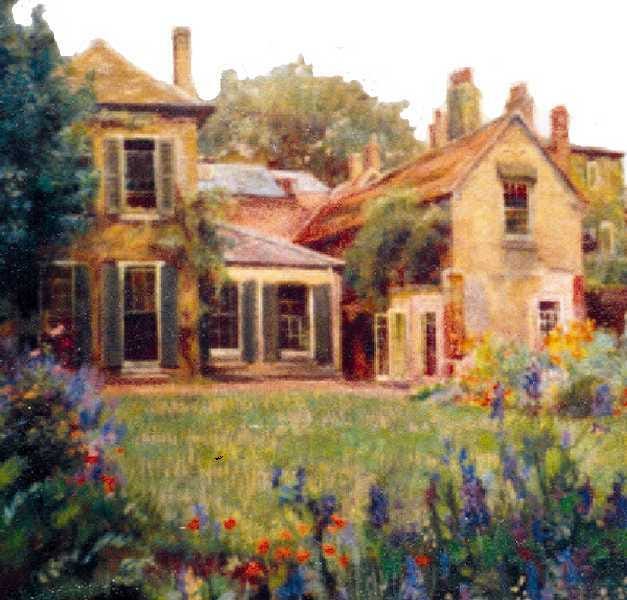
Fanny’s father William Farthing Johnson was the third of William’s four children. The children inherited their father’s intellect and love of learning – William Farthing studied at Corpus Christi College but as a Baptist was not able to gain his Cambridge BA until 1856, when the University Act opened most degrees to non-conformists. Meanwhile he gained a BA from the University of London, which did not discriminate against dissenters. He succeeded his father as headmaster of Llandaff House School in 1851 and became a notable Cambridge figure, serving as a Justice of the Peace for many years. He was the first president of the Cambridge YMCA, and a deacon at his Baptist chapel for forty-five years. When the Macmillan brothers first arrived in Cambridge in 1843 they were enthusiastic members of the Baptist church.
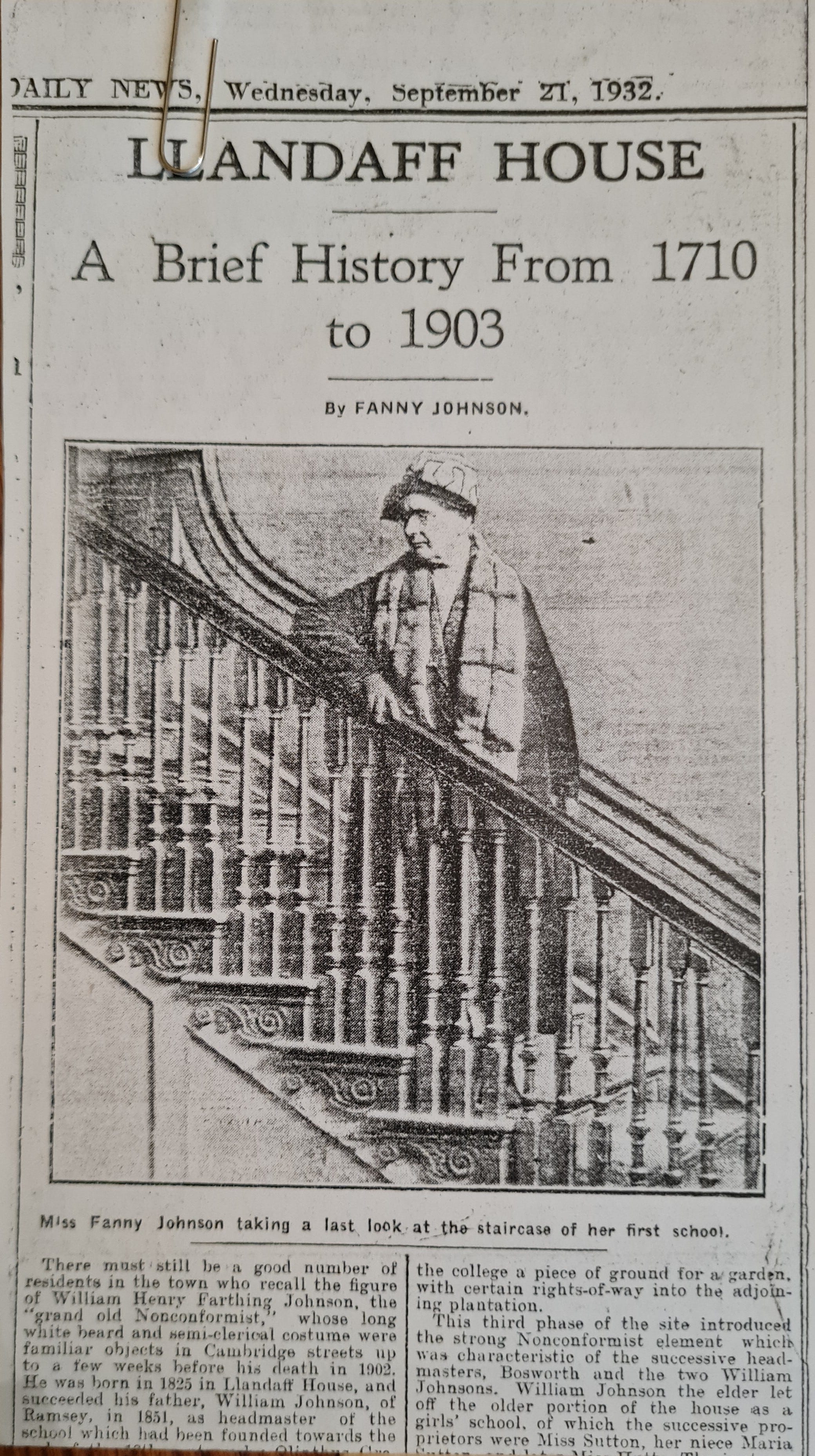
Fanny’s maternal grandfather, Augustine Gutteridge Brimley, married in succession two sisters and had four children – George, Caroline, Harriet and Fanny. His second daughter Harriet married William Farthing Johnson in 1851. She was a great lover of literature, and acted as matron and teacher at Llandaff House. Meanwhile in the same year her sister Caroline married their brother George’s closest friend, Alexander Macmillan. Thus the Johnson children, including Fanny, were first cousins to the Macmillan children.
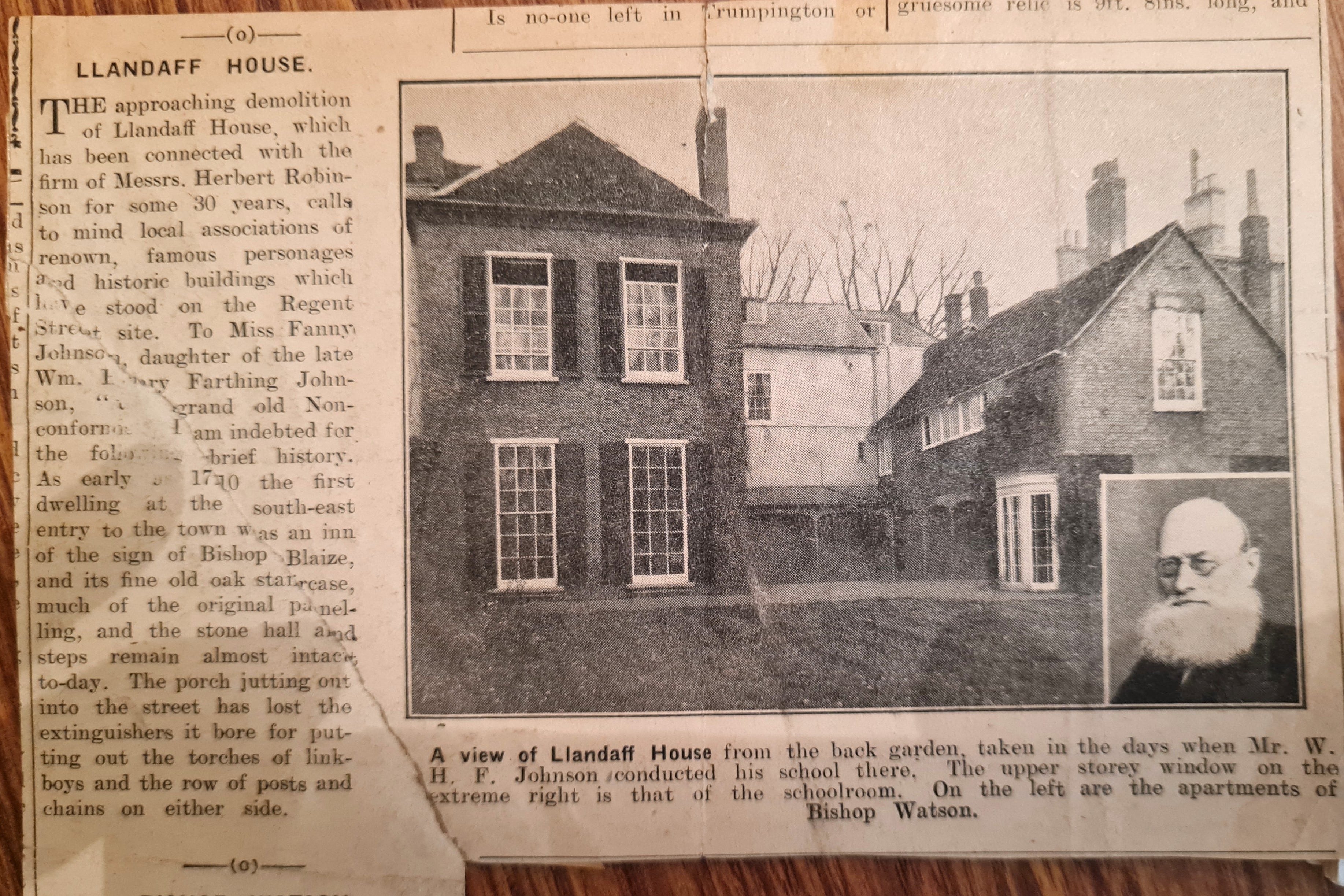
Fanny Eliza Johnson was born to William Farthing Johnson and Harriet on 30 November 1855, the third of eight children. She seems, like Nelly, to have been educated at home, although her brothers and some of her sisters were sent away to school, but the house where she lived was a centre of academic and literary pursuit in Cambridge. When she was sixteen, the hostel for girl students which was to become Newnham College was set up very close to their house. All the Johnson family were keen supporters of emancipation and educational rights for women. Fanny’s first employment as a teacher was at Nottingham High School in 1877 at a salary of £100 per annum, then in 1881 she moved to Croydon School. Her youngest sister Alice went up to Newnham in 1878 and gained first class honours in Natural Sciences in 1881 – the first year women were allowed to sit the Tripos exams and have their results formally recognized (although it would be many years before they were granted degrees!).
In 1888 Fanny was appointed headmistress of Bolton High School for Girls. The establishment had opened in 1877, backed by local subscriptions, and had already seen several changes of headmistress. When Fanny arrived there were some fifty girls and three assistant teachers, plus four visiting teachers. Fanny kept an excellent log of events at the school, and set about reforming the syllabus, introducing more poetry and reading lessons in the lower school, as well as more practical science lessons.
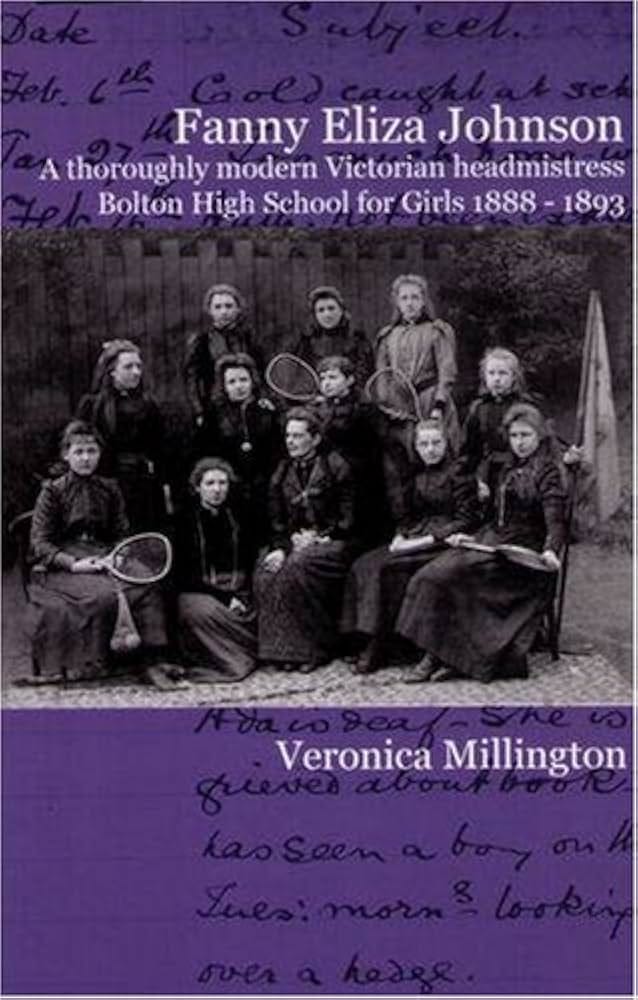
In her second year, she exploited her family contacts at Macmillans to obtain a present for the school library of sixty-eight volumes of stories, poetry, biography and travel writing. Miss Johnson played piano for the girls, performed in school dramas and organised school trips. But she also believed in training the girls to be ‘useful, serviceable women’ and pupils spent time making toys and clothes for the local infirmaries and children’s homes. A kindergarten was established and she drew up plans to raise the numbers to a hundred, including encouraging girls to stay on until they were eighteen. Fanny was conscious that the position of women in society was changing: ‘Every girl should look forward to the possibility that she may have to earn her own living.’ No girl could be certain of marriage, she said, and ‘even marriage does not always mean being provided for without exertion.’ Wise words.
Above all, Fanny believed in raising the girls’ academic aspirations and ambitions. She put her girls forward for the Cambridge Senior local examinations, and within the year the first pupil would win a place at Newnham College. Plans were developed for much larger new school premises – which were officially opened in May 1891, by Mrs Millicent Garrett Fawcett. Fawcett was the sister of Elizabeth Garrett Anderson, the first female to qualify as a doctor in England, the widow of Professor Henry Fawcett at Cambridge and the leader of the National Union of Women Suffrage Societies. She was also a close friend of Alexander Macmillan, her husband’s publisher. In 1868 Millicent had written an influential article for Macmillan’s Magazine on the importance of higher education for women, which had publicised the campaign to found Newnham College. The service at the Bolton High School opening ceremony was conducted by Canon Atkinson from North Yorkshire, presumably known to Fanny through her links with the Macmillans.
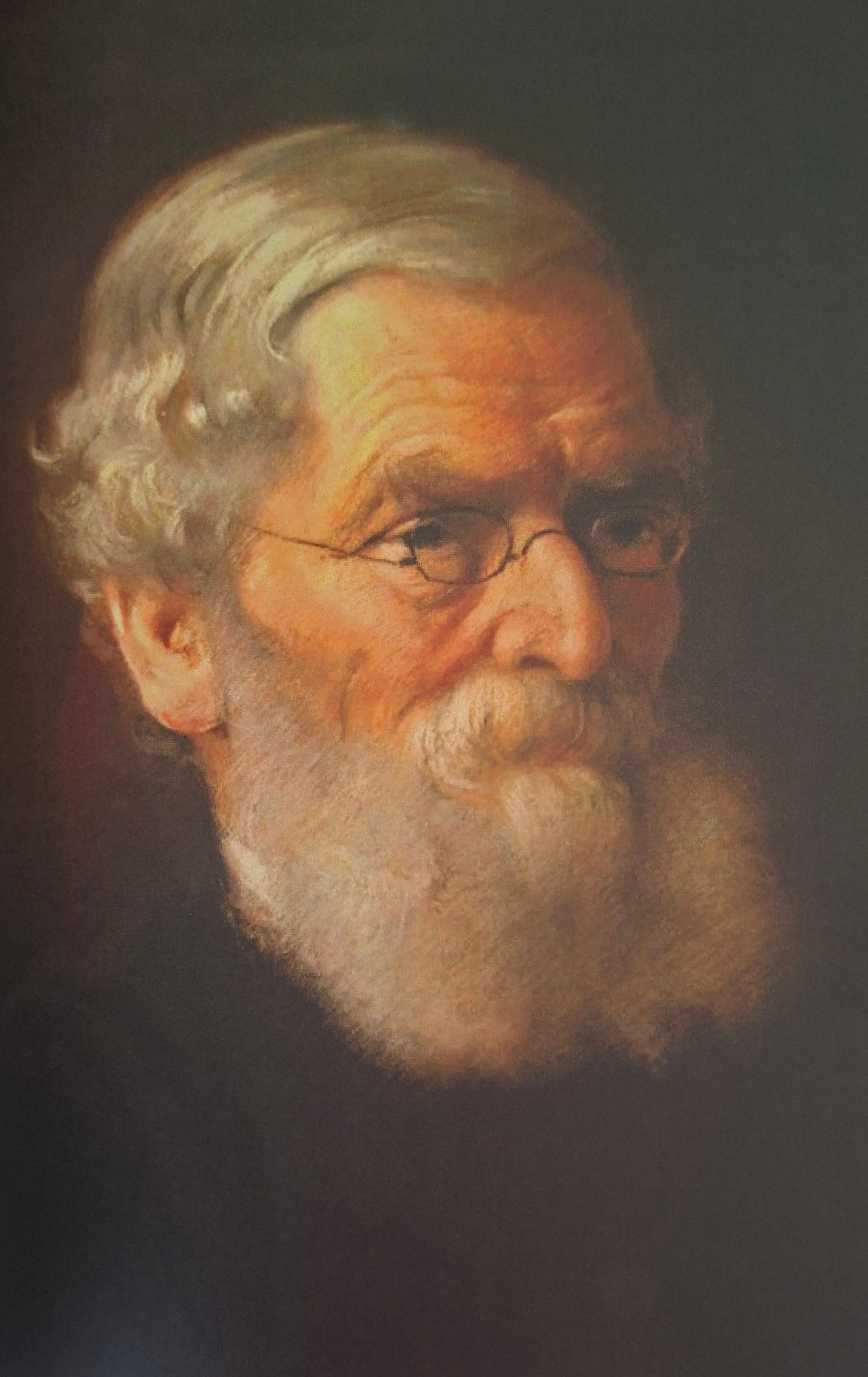
In her address to the girls and their parents, Miss Johnson chose to highlight the value of Arts and Crafts. ‘The importance of hand and eye training, even for those who have not to depend on clever hands for the means of livelihood, is becoming more and more recognized by the leaders of education’ and she robustly defended two recent school trips to the Autumn Exhibition of Pictures in Manchester and to the Printing Office of the Bolton Evening News. She also thanked the Trustees for a newly established Leaving Scholarship of £35 for two or three years to a pupil of seventeen or more who wished to go to university.
Mrs Fawcett was a famous figure for those who followed the cause of women’s rights, and would have been especially well-known to the girls at Bolton School as the mother of the celebrated Philippa Fawcett. In the summer of 1890, Philippa, a student at Newnham College, had sat the University of Cambridge mathematics examination and had beaten the Senior Wrangler - the best male undergraduate of the year - with a mark 13per cent higher than his. The winner of the title of Senior Wrangler was always well-publicised in the British press, so this marked a massive triumph for those who supported the cause of education for women, at a time when many were arguing that women could never compete with men. A Newnham College student recorded in her diary: ‘The great event of the year was Philippa Garrett Fawcett’s achievement in the Mathematical Tripos. For the first time a woman has been placed above the Senior Wrangler. The excitement in the Senate House when the lists were read was unparalleled. The deafening cheers of the throng of undergraduates redoubled as Miss Fawcett left the Senate House by the side of the Principal. On her arrival at the College she was enthusiastically greeted by a crowd of fellow-students, and carried in triumph into Clough Hall. Flowers, letters, and telegrams poured in upon her throughout the day. The College was profusely decorated with flags. In the evening the whole College dined in Clough Hall. After dinner toasts were proposed: the healths drunk were those of the Principal, Miss Fawcett, her Coach (Mr Hobson) and Senior and Junior Optimes. At 9.30 p.m. the College gardens were illuminated, and a bonfire was lighted on the hockey-ground, round which Miss Fawcett was three times carried amid shouts of triumph and strains of “For she’s a jolly good fellow.”
Fanny Johnson had been in the University Senate House when the results were announced and on her return to Bolton had described the scene to the excited and inspired pupils. Then she and a number of the girls had written to Philippa with personal congratulations.
Running Bolton High School was not without logistical difficulty: and twice Fanny drafted in her young nieces and cousins to fill teaching gaps – first Edith, the daughter of her brother Henry and then Janet Bowes, daughter of Robert and great-niece of Alexander Macmillan, came to Bolton to teach. However at the beginning of the autumn term 1893, after five years in Bolton, Fanny fell ill and was unable to return to work. She was succeeded by a Miss Dymond, with a degree from Newnham, who would remain at the school until 1919.
The school magazine of 1894 reported that Fanny was better and travelling in Italy. In the autumn of 1894 she returned to school to give a lantern slide lecture to the Old Girls on her Travels, complete with photographs and sketches. Did she encourage Nelly to visit Italy as well? Perhaps they went together? In the 1901 census she was recorded as living in Chelsea, London with her brothers Rex and Augustine, not far from Nelly’s studios. In the census she was described as an author and, impressively, as ‘head of the household’. In 1902 Llandaff House in Cambridge was sold and Rex married. Fanny went back to Cambridge and moved to 1 Millington Road, to live with her brother William and her sister Alice – named Ramsay House after their grandfather’s birthplace. William, who was an extremely well-respected mathematician and philosopher, was widowed in 1904, and Fanny and Alice looked after his two small boys.
Fanny spent her time writing and working for good causes, with a particular interest in German literature, as well as adapting dramatic scenes from history as school play scripts. In the 1920s her pageant plays were published by Bowes and Bowes. She remained active politically, with controversial views on equality that she was happy to express in print: a letter to ‘The Freewoman’ magazine in 1911 included the great line ‘Might not the advice to go home and mind the baby sometimes be applied to fathers?’ This enthusiasm brought responsibility as she was appointed press secretary of the Cambridge Women’s Suffrage Association from 1912 and remained actively involved, keeping its presence alive in the press throughout the war. The CWSA had over 500 members. She was also active in the Labour Party and the Women’s International League.
There is a glimpse of Fanny in the memoirs of Frances Partridge, a member of the Bloomsbury group, who studied Logic at Cambridge just after the First World War under Fanny’s brother William. Frances thought that William (Willy, as he was known) had a brilliant mind and knew that he had been an influence on John Maynard Keynes. She describes him as very shy but affectionate, and a born teacher. He invited his students to join him at home for musical tea parties, and Frances was allowed to turn the pages for him while ‘his tall gaunt sister Fanny stands listening with a plate of cucumber sandwiches in her hand.’1 Fanny died in 1943 at the grand old age of 87.
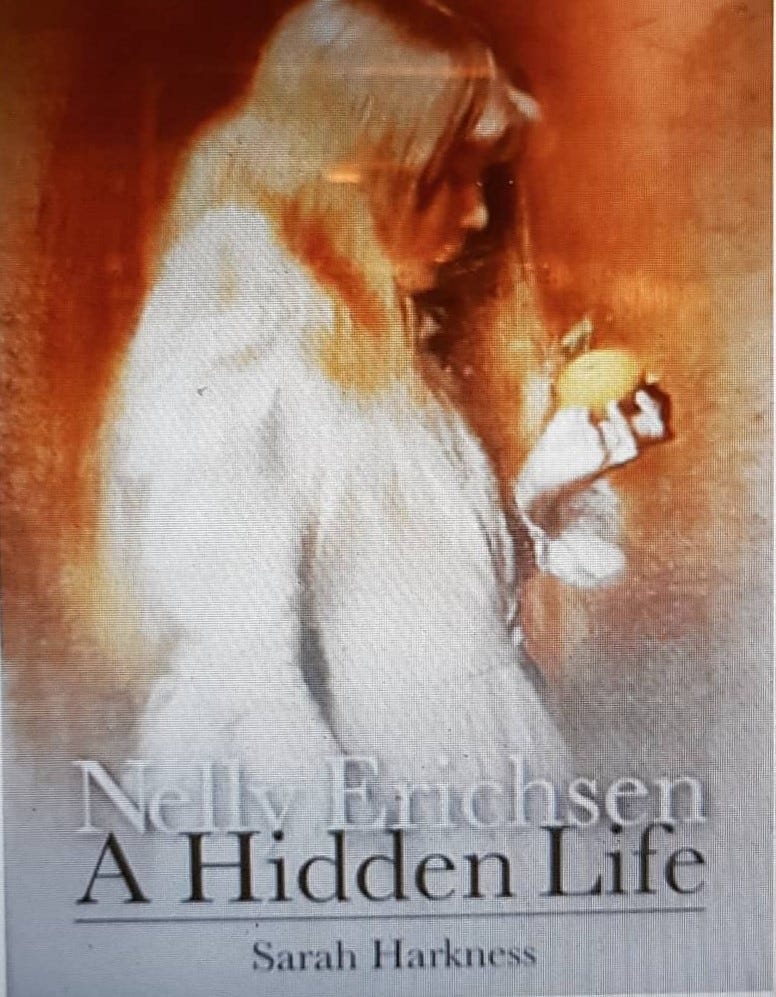
Fanny also appeared in Nelly Erichsen: A Hidden Life as the friend taking tea in Nelly’s Chelsea studios when George Bernard Shaw comes to call. He describes the incident in a letter to a mutual friend, Bertha Newcombe:
When I got there, lo! A chaperon, a sly little woman who was drawing N on millboard. N’s introduction clearly meant ‘I am sorry to disappoint your evident hope of finding me alone’ but I have no intention of trusting you to that extent.’ Naturally our constraint was fearful. Presently the little woman began to smile slyly as she surveyed us with confidential good nature. She hurried up the tea, and then, before we could intervene, nodded at us in a ‘I know you want to get rid of me way’; snatched up her things and deserted her hostess, leaving us in the most miserable confusion.
You can read what happened next here, but who else has noticed Shaw’s unpleasant remarks about ‘a little woman’ - Partridge remembers her, many years later, as tall, if gaunt:

Fanny’s sister Alice Johnson (1860-1940)is also worth remembering: she was a prominent figure in British psychical research, acting as paid organising secretary to The Society of Psychical Research in London from 1903 to 1916, research officer from 1908 to 1916, and editor of The Proceedings. Her background was in biology, she attended Newnham College Cambridge, being one of the first two recipients in 1882 of the Bathurst Studentships, founded for the encouragement of advanced work in natural sciences, and she subsequently worked as a demonstrator at the Balfour Laboratory. At that time the Vice-Principal of Newnham was Eleanor Sidgwick, a keen scientist and educationalist, and sister of Arthur Balfour, later Prime Minister. Alice became Eleanor’s private secretary, and was thus introduced to the world of psychical research. She participated in experimental sittings with mediums including the American Leonora Piper, and collaborated on several key texts in the area. She predeceased her sister Fanny by just three years, dying at the age of 80.
Nelly Erichsen, Bertha Newcombe, Fanny and Alice Johnson: there are so many women who never married, left no families to remember them, and who have disappeared with so little trace, but who lived remarkable, brave and independent lives. Nobody said it better than George Eliot:
‘that things are not so ill with you and me as they might have been is half owing to the number who live faithfully a hidden life, and rest in unvisited tombs.’
F Partridge: ‘Memories’