
A Woman's Place
And the post-War campaign to keep her in it

Work has been the twentieth century’s greatest gift to women. It is dignified, which puts her, as far as the chance of happiness is concerned, upon the same level as men.
(Time and Tide, 25 November 1927)
Forgive me, subscribers, for I have sinned. It has been four weeks since my last post…
In my defence, I have been very busy in pursuit of my Wives of Power, (the deadline approaches, slowly) and very enjoyable it has been. The chase has taken me to the Churchill Archives in Cambridge (three times now!), to the Towner Gallery in Eastbourne, to the Archives at Kew and the LSE, to a rather hot little room studying the Board minutes at Great Ormond Street Hospital, and tomorrow I will be back in the Bodleian in Oxford. And all because I want to do full justice to my twelve women and the extraordinary, pioneering lives they lived. Yes, they were married to famous, important, powerful men, MPs whose careers needed visible, public support in the constituency or in the gallery of the House of Commons. Yes they (mostly) had children to raise and households to manage. But neither of these responsibilities held these women back from living their own lives, building their own careers, fighting their own battles.
Why is what they did so important? Because they were swimming against a strong tide, the post-World War Two tide that wanted to sweep women back into the kitchen, to ensure that not only would there be enough jobs to go round for the men, but comfortable homes and sustaining meals for them to come back to in the evening.
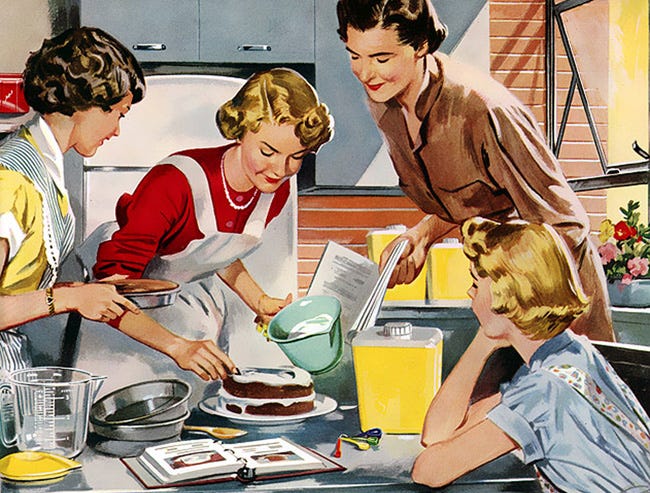
It had happened after the First World War: in 1918, as the war ended, there were six million women in Britain in paid employment. Rapid demobilisation which sent the men home to reclaim their old positions put half a million women out of work within six months. The numbers of women registering for unemployment benefit only dropped when the authorities began to insist that a woman seeking work should be prepared to enter domestic service. Funnily enough, they weren’t keen.
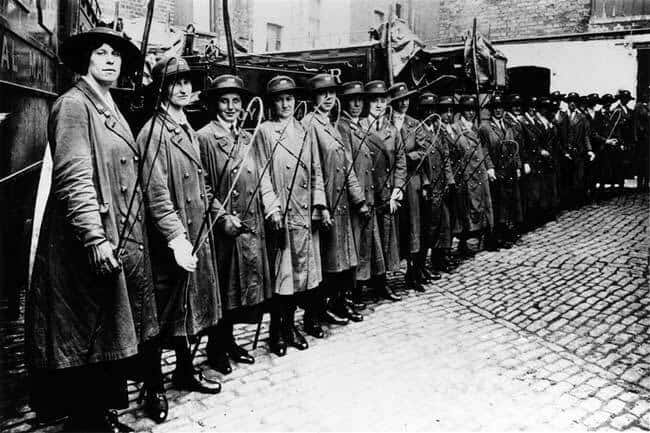
Throughout the 1920s and 30s the trade unions were overwhelmingly protective of male rights; barriers to women working were erected around certain industries, and the introduction of the marriage bar in the civil service and teaching professions forced even more women back into the home. The civil service lost nearly five per cent of its female workforce every year just because they chose to marry. Many medical colleges stopped admitting women, or introduced a quota system, which extraordinarily continued into the 1960s. Sir George Barnes, a Labour MP, said ‘If I were an employer just now, I would have an enquiry made as to the condition in life of my women workers and I would weed out all those not dependent on their own work for means of living.’
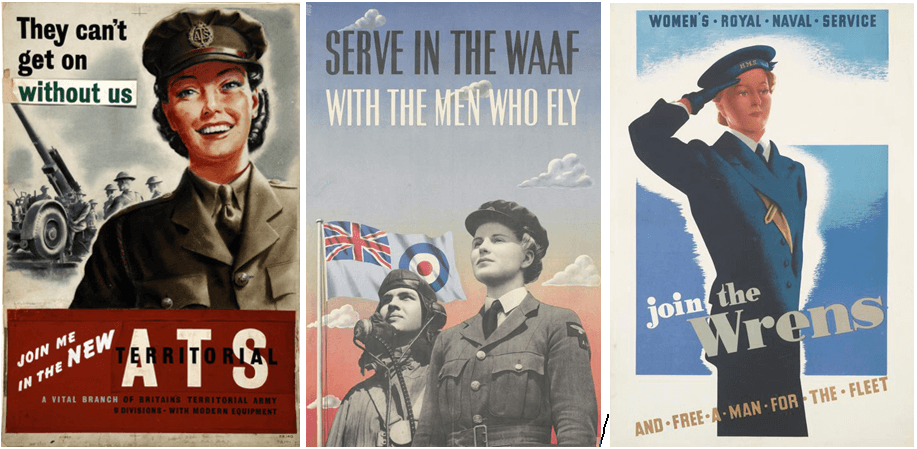
By the time the Second World War came around, women had got smarter, and the jobs they were asked to do were more interesting, more challenging and carried more responsibility. Unmarried women, and married women with older children, were subject to conscription, either into the armed forces or into industry. By 1943, 46 per cent of all women aged between 14 and 59 were doing paid work. But just four years later, the number of married women in employment had shrunk to fewer than one in five. Yet again, they were being asked to make way for the men. This time, there was more resistance. Vera Brittain, the peace campaigner, would say that ‘my great object is to prove that work and maternity are not mutually exclusive’.
So how to persuade the vast majority of women, who were now better educated and more likely to practise family planning (and so spend less of their lives simply producing babies) that they should stay at home? One way is to make them feel too guilty to leave; the other is to modify their education so they are unable to compete. Enter two particularly powerful voices, in what Margaret Mead, the anthropologist, would call ‘a new and subtle form of anti-feminism’: Dr John Bowlby, and John Newsom.
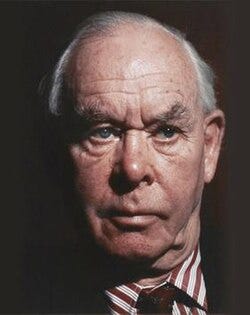
John Bowlby was a Cambridge-educated British psycho-analyst who had been brought up in a large, wealthy family by a nanny, and sent away to boarding school when he was seven. During WW2 he spent a lot of time studying the behaviour of children who had been evacuated from London as well as some of the children of the Kindertransport: after the war, he was Deputy Director of the Tavistock Clinic, and from 1950, Mental Health Consultant to the World Health Organization. In 1951 he published a report for the WHO, Maternal Care and Mental Health, which analysed the psychological damage done to children who had been orphaned or abandoned during the war and effectively institutionalised. These were clearly a set of very unhappy but extreme cases. Nevertheless, the report concluded that, to quote from Wikipedia:
The infant and young child should experience a warm, intimate, and continuous relationship with his mother (or permanent mother substitute) in which both find satisfaction and enjoyment and that not to do so may have significant and irreversible mental health consequences.
That ‘the prolonged separation of a child from his mother during the first five years of life stands foremost among the causes of delinquent behaviour’ became accepted folklore across Britain…and of course fathers were completely absolved! Bowlby’s development of this theory and its linked concept, separation anxiety, was quickly recognised and adopted by politicians keen to guilt women into giving up their careers and staying at home with the children. It combined with a growing social concern about rising levels of juvenile delinquency. Of course, for most mothers, staying at home full time was an unaffordable luxury - if the family needed a second income to survive, then some form of childcare would be found, whether a creche or a grandparent. But for those couples who did not need a second income, there was great social pressure to stay at home and be a good mum. As Ruth Adam pointed out in A Woman’s Place, published in 1975 (and now re-published by Persephone Books):
The graduate mothers of the post-war era, who stayed dutifully by the baby’s side for fear of doing psychological damage, were probably the first highly-educated women in history expected to make themselves the body slaves of their own child, since any mother before them who had been in the financial group able to allow girls to become learned, had taken care to pay someone else to mind the baby.
But what to do about those troublesome women who thought that staying at home was a waste of their education? Along came another John, later Sir John Newsom, who thought that the answer to this was to change the educational curriculum of the girls. After all, if only one per cent of post WW2 girls were getting university places, what was the point in teaching all the other girls a lot of stuff they would never need?
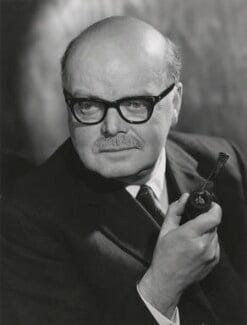
Newsom’s theory got full expression in a book he published in 1948, The Education of Girls. In case you think that I am quoting some peculiar and distant offshoot of the patriarchy here, let me add that it was published by the well-respected house of Faber and Faber, and the foreword was contributed by RA Butler, recently Minster for Education, whose 1944 Education Act set the standard for secondary education in England through to the 1960s. Butler wrote, perhaps showing some nervousness:
Even though our girls may be taught to be good cooks and mothers, we cannot with our present limited manpower resources risk leaving undeveloped the mind of any girl who can serve her homeland as well as [Mr Newsom] would wish her to serve her home.
But Mr Newsom was having none of this. His thesis is to me absolutely jaw-dropping. Here are some extracts - was he being unnecessarily provocative, argumentative? Did he actually believe this stuff?
I have little patience with the woman who wants to leave husband and children to the care of paid labour while she herself seeks outside work because it is more intellectual. To my mind the ordering of the home, the bringing up of children, the bringing to the home the best possible help that modern achievements can provide, require not merely the greatest effort, but the most sustained effort of service, that infinite capacity for taking pains which amounts to genius.
and
It is also true, though it will be hotly denied, that in many girls’ grammar schools the more intellectually able pupils take a second foreign language while the less able are allowed to take domestic science, forgetful of Samuel Johnson’s dictum that ‘a man is better pleased when he has a good dinner upon his table than when his wife talks Greek.’ To those who argue that women have the right to learn two foreign languages, my reply is that just as much intelligence is required to attain high honours in the domestic arts, and that to produce an Homard a l’Americaine to perfection needs as much as with as to construe one of the more obscure passages of Berenice.
and
The future of women’s education lies not in attempting to iron out their differences from men, to reduce them to neuters, but to teach girls how to grow into women and to re-learn the graces which so many have forgotten in the past 30 years.
I could go on quoting passage after passage. He has a particularly low opinion of most girl school leavers:
[A girl leaving school] wants good money quickly…because money enables her to be self-supporting and to buy those clothes, cosmetics, ‘perms’, visits to the cinema and dance hall which are vital equipment in her primary task of securing her man.
Nor does he have much of an opinion of the girl who might want to study, as she is wasting her efforts:
the grammar school girl, if she has ever attempted domestic science, is far too busy doing her homework…to get down to such a sordid subject as boeuf bourguignonne or a crème caramel…It is an expensive business to become a doctor or an architect and only the outstandingly brilliant girl will get her post-school or even post-university training subsidised out of public funds. Many parents cannot afford to give their daughter these advantages and if there are boys of equal capacity in the family they have first call on its resources.
Newsom argued that the 99% of girls who would not be going to university should only be taught a more sophisticated form of domestic science, with some basic health and childcare thrown in, and enough knowledge of household budgeting to stop them being a nuisance to their poor husbands. And he was not alone in this, after all, the Ministry of Education had recently published Circular 117 which stated that ‘an incalculable sum of human happiness and efficiency depends upon the knowledge and skill applied to the running of the home and the upbringing of children.’
Newsom was an increasingly well-regarded educationalist. After this book, whose prescriptions luckily were never actually adopted by any British government, he went on to chair a very sensible commission in the early 1960s that recommended that far more resources should be expended on educating the children of the slums, and those with below average educational ability. Of course he could not have foreseen that the British economy of the 1950s and ‘60s would require a massive expansion of the workforce, such that it would no longer be economically feasible to exclude 99% of women from working. The sadness is that he also could not imagine how much our national business, cultural and social life would be enhanced and enriched by allowing men AND women to participate.
Of course, to be fair to Newsom (if I must), women were not particularly welcomed in the workplace. As late as 1971, a survey carried out by PEP, the economic thinktank, undertook a survey of women who had managed to reach senior positions.1 They noted that post-War there had been a significant expansion of what could be termed ‘women-friendly’ career opportunities in new booming industries such as advertising, marketing and even computing. But there were some areas, such as City finance, that were still completely male-dominated. PEP focused on the BBC, which although a Government quango, was more progressive than the Civil Service - equal pay, no marriage bar, senior women in very senior positions at its founding. One of the first five Governors in 1927 was a woman. In 1950, Mary Somerville became the first female Programme Controller. But still the bastions of power seemed impregnable, and the number of women in senior positions was, if anything, declining.
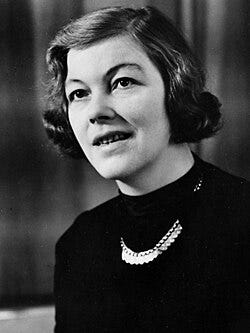
PEP discovered that only 5% of the top jobs were held by women - a statistic that cannot have been helped by the General Training Scheme, founded in 1954, which did not admit women until 1960. There were no women reporters on national news programmes - the British Public ‘couldn’t possibly trust a woman on politics.’ The PEP survey continues with direct quotes from BBC staff:
Men are considered to make good managers in more cases than women…Probably among the very senior staff there is a feeling that women are more emotional and more dangerous in high office…No film crew wants to be told what to do by a woman…I should hate working for a woman…
And this is probably my favourite, from ‘a former top BBC man’:
The General Training Scheme militates against women. We’re looking for future Director Generals - and that’s by definition a man.
(NB There has never been a female Director-General of the BBC)

Whatever Bowlby and Newsom and their disciples thought, the fact remains that throughout the 1950s and 60s the number of married women, mothers included, who entered the workforce and stayed in it continued to rise. By 1961, more than half of married women were working, up from only 18% in the years immediately after the war. They wanted the luxuries that money could buy - the second car, the foreign holiday, the labour-saving dishwasher. But they also wanted the dignity, independence and fulfilment that having one’s own pay cheque can bring.
The life of washing up dishes in little separate houses and being necessarily subordinate in everything to the wage-earning man is I think very destructive to the women and to any opinion they may influence. It is humiliating and narrowing and there is nothing to be said in its favour. (Amber Reeves)
The battle for equal pay and to end sex discrimination finally achieved concrete results under the Wilson Governments of the 1960s and 70s, but it still continues. When I worked in corporate finance in the City in the 1980s, I was kicked off the team advising a certain well-known housebuilding client because its larger than life Chief Executive ‘did not want any effing women on his account’. My bosses were perfectly happy to oblige him, despite my complaints.
The twelve women I am currently researching, the Wives of Power, built their careers in a society which did not value women’s contribution - did not pay them properly, discriminated against them in the workplace, did not give them the same educational opportunities, and subjected them to harassment and abuse in far too many environments. It makes their achievements all the more remarkable.
Women in Top Jobs, Allen & Unwin, 1971
Oh, this has made me FUME! How little changed since 100 years previously the first women dared to put themselves forward for higher education in the UK and Ireland. And the injustice in depriving women and girls of education continues, as you say. Your posts are always so entertaining and informative, Sarah, well done on all the archive visits and look forward to your book.
As background to her new book Wives of Power, Sarah Harkness outlines some of the challenges which women faced as they sought to find dignity in paid employment.
While it wasn’t my objective, when writing about the development of economics in How to Think like an Economist, I found myself confronting a similar problem. Men did not afford women the dignity of thinking seriously about the economy.
Much here about the barriers which women faced more generally as they sought opportunities to use their talents to the full.